
Overview of Spectral-GS. 3D Gaussian Splatting (3DGS) [Kerbl et al. 2023] decides whether to split based on the positional gradients and the spectral radius of the covariance matrix without considering the shape of primitives. We propose the 3D shape-aware splitting strategy based on the spectral analysis (3D Split). In screen space, both the EWA filter [Zwicker et al. 2002] of 3DGS which attempts to cover an entire pixel, and the Mip filter of Mip-Splatting [Yu et al. 2024] which approximates supersampling, result in a reduction of spectral entropy when zooming in to synthesize novel view. Our view-consistent filter’s kernel is not constant to maintain the spectral entropy consistency (2D Filter).
The condition number and spectral entropy can be used to measure the shape or degree of anisotropy of the Gaussian.
1. Loss-sensitivity and shape-unawareness in densification.
2. View-inconsistency in filtering.
Qualitative comparisons on the synthetic scenes and real scenes. Differences in quality highlighted by insets. We visualize the spectral entropy maps of 3D Gaussians. Bluer regions indicate lower spectral entropy, with more needle-like degraded Gaussians, while greener regions represent higher spectral entropy.
Click the image to use the real-time interactive viewer.
chair
chair 3DGS
chair Mip-Splatting
chair Analytic-Splatting
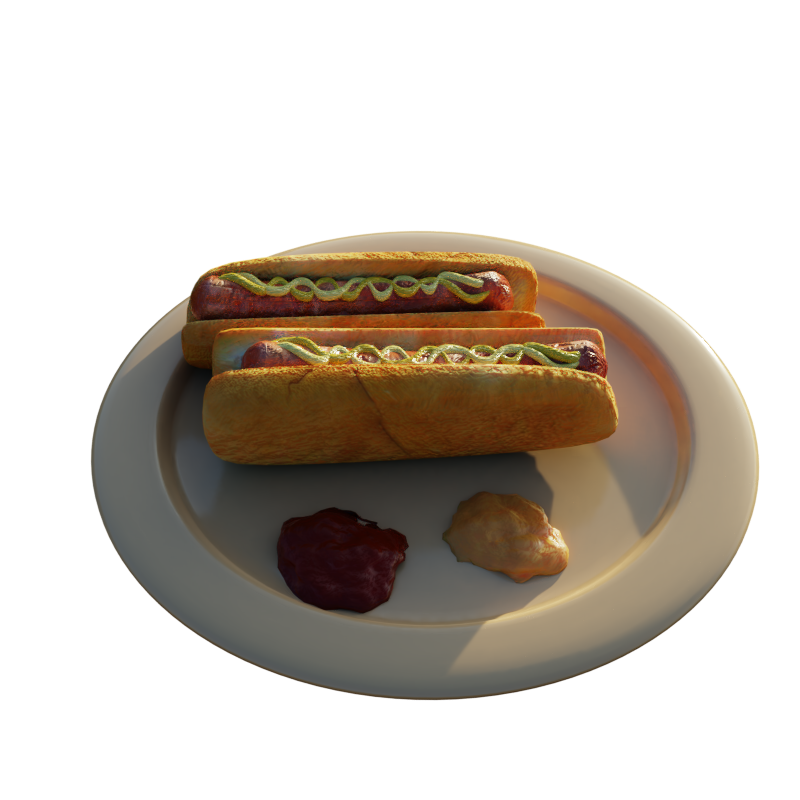
hotdog
hotdog 3DGS
hotdog Mip-Splatting
hotdog Analytic-Splatting
@inproceedings{spectralgs,
author = {Huang, Letian and Guo, Jie and Dan, Jialin and Fu, Ruoyu and Li, Yuanqi and Guo, Yanwen},
title = {Spectral-GS: Taming 3D Gaussian Splatting with Spectral Entropy},
year = {2025},
isbn = {9798400721373},
publisher = {Association for Computing Machinery},
address = {New York, NY, USA},
url = {https://doi.org/10.1145/3757377.3763907},
doi = {10.1145/3757377.3763907},
booktitle = {Proceedings of the SIGGRAPH Asia 2025 Conference Papers},
series = {SA Conference Papers '25}
}
The authors would like to thank the anonymous reviewers for their valuable feedback. This work was supported by the National Natural Science Foundation of China (No. 61972194 and No. 62032011) and the Natural Science Foundation of Jiangsu Province (No. BK20211147).